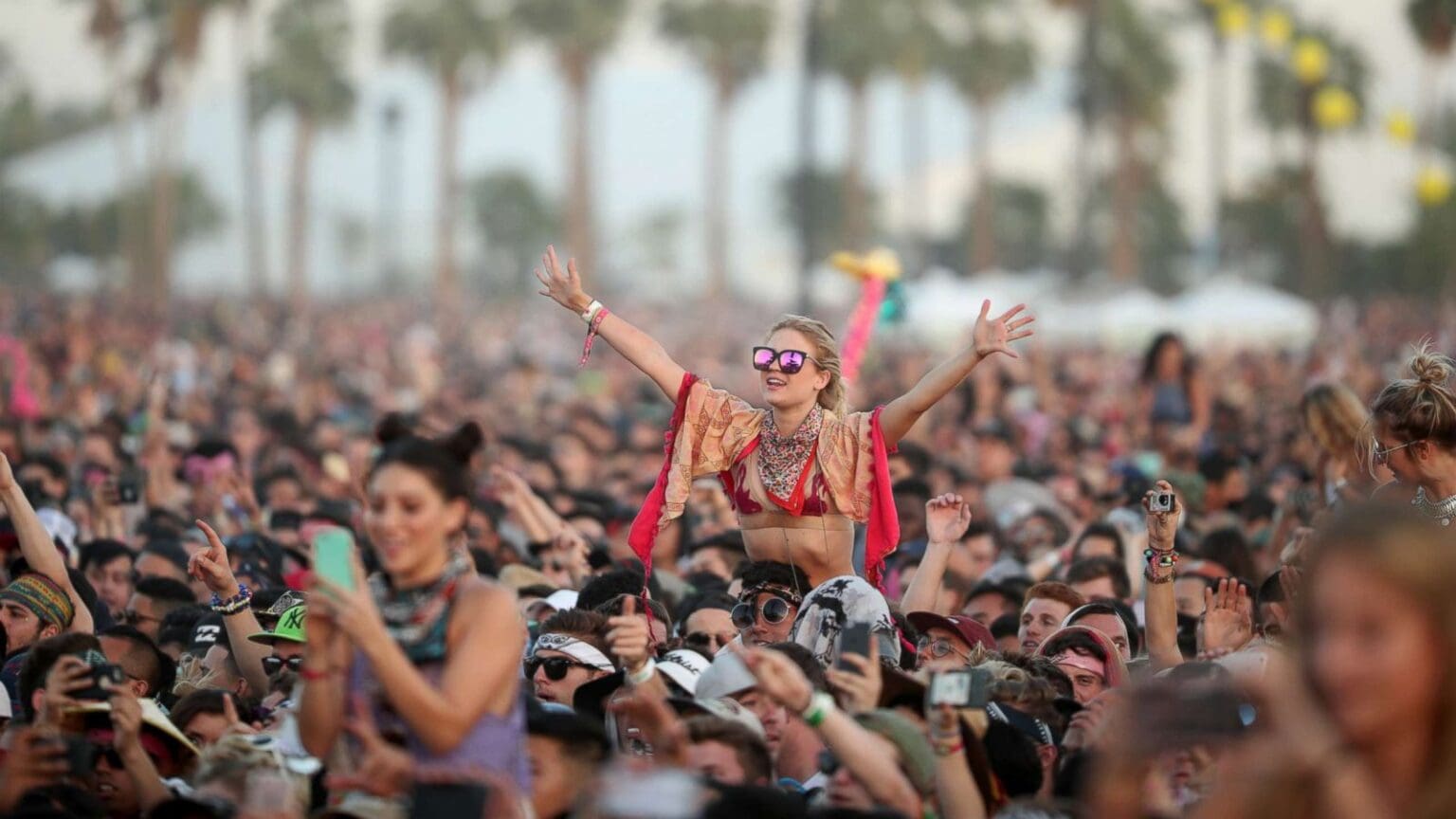
Coachella is still culturally relevant. It still sells out, dominates timelines, and draws enough celebrities, creators, brands, and media to make itself feel both consequential and inescapable.
Its issue isn’t relevance; it’s overproduction.
Coachella has become so efficient at producing visibility that it increasingly risks hollowing out the thing that once gave it cultural power. Not because music no longer matters there. Not because people have stopped caring. But because the event now exists inside a level of optimization that makes cultural participation feel less like discovery and more like performance management.
A festival can remain culturally central while becoming aesthetically flattened, commercially overdetermined, and symbolically exhausted. Music wants spectacle. Brands want exposure. Creators want content. Audiences want authenticity. Everyone arrives needing the same event to generate a slightly different form of value, and eventually, the pressure begins to show.
Coachella in 2026 feels like that kind of event.
The official machine is intact. The live stream remains extensive. The onsite scale is still massive. The artist bookings still generate headlines, from Bieber’s comeback narrative to Karol G’s historic headlining set. But around that machine sits another one: influencer trips, off-site activations, brand dinners, gifting suites, “accidental” product placements, and strategically staggered recap posts designed to keep the event visible long after the weekend ends.
At a certain point, the event starts to look less like a festival than a supply chain for cultural imagery.
That is why critiques of Coachella tend to sound less like rejection and more like fatigue. The problem is not that it has become irrelevant. It has become too aware of its own relevance. The event still works, it just works too predictably, for too many people, in too many ways at once.
This is a familiar problem in the creator economy.
Once a cultural moment becomes legible as a high-performing content opportunity, it attracts participation shaped by incentives rather than instinct. The result is not necessarily bad content. Often, it is polished, efficient, and highly functional. But it begins to lose friction. Everything starts to look as though it came from the same reference board, the same brand brief, and the same idea of what audiences are supposed to want from the weekend.
And audiences can feel that.
Part of the reason Coachella discourse keeps returning to cost, sponsorship, relatability, and overstylization is that people are responding to a widening gap between experience and presentation. What once read as aspiration can begin to read as logistics.
That is a problem for brands. It used to be enough to be seen at Coachella. Then it was enough to activate around Coachella. Now, audiences are more literate than that. They understand creator seeding, sponsorship architecture, and that the best outfit post may have six layers of commercial intention behind it. While branded participation is still possible, lazy participation is easier to spot.
The same goes for creators.
Coachella still offers a real opportunity. But it also places creators inside one of the internet’s most oversaturated content environments. The challenge is no longer simply getting there. It is saying something distinct once you do. In a landscape crowded with highly polished sameness, humour, honesty, and actual perspective travel further than simply reproducing the expected visual language of the weekend.
This is where Coachella becomes a useful case study. Not because it tells us whether festivals are still cool, but because it reveals what happens when cultural capital becomes too optimized for extraction.
A moment can be successful and depleted at once. The creator economy did not invent this dynamic, but it accelerates it. The more efficiently a moment can be monetized, the faster its image hardens into a formula. And once the formula takes hold, relevance starts to feed on itself, becoming self-cancelling. People keep paying attention, but with growing irony. They keep watching, but with skepticism. The attention remains, but its texture changes.
Coachella isn’t dead, and it is not uncool because brands and creators are there. That understanding is too easy. The more interesting truth is that Coachella remains culturally central because it has become the perfect expression of a culture that cannot stop turning shared experiences into content systems.
For anyone working in the creator economy, Coachella is not merely a festival. It is a test. It asks whether brands, creators, and media still know how to participate in culture without immediately overproducing it. It asks whether visibility can still create desire once every part of the machine is exposed. It asks whether cultural relevance can survive total optimization.
So far, Coachella’s answer seems to be yes, but with diminishing elegance.
It remains one of the biggest stages in contemporary culture. But increasingly, what it puts on display is not just music, fashion, or influence. It is the strain of a cultural event trying to remain alive while too many people use it simultaneously.